Product 03 · Liquid Fertilizers
Liquid fertilizers
For modern agriculture in Romania — operate at GPO with total segregation, multimodal dispatch, and loading speed adapted to agricultural seasonality.
For modern agriculture in Romania — operate at GPO with total segregation, multimodal dispatch, and loading speed adapted to agricultural seasonality.
The European environmental strategy aims to increase the use of liquid fertilizers over solid ones, due to their advantages: much faster absorption in plants and cereals, the possibility of direct injection into irrigation systems, significantly lower soil losses. Through implemented European directives, the goal is to achieve 100% liquid fertilizer usage by 2030.
Currently, the use of liquid fertilizers in Romania is limited — both due to the decline of the domestic petrochemical sector and insufficient national and European supply. Imports remain the main source, and dedicated port capacities are almost non-existent.
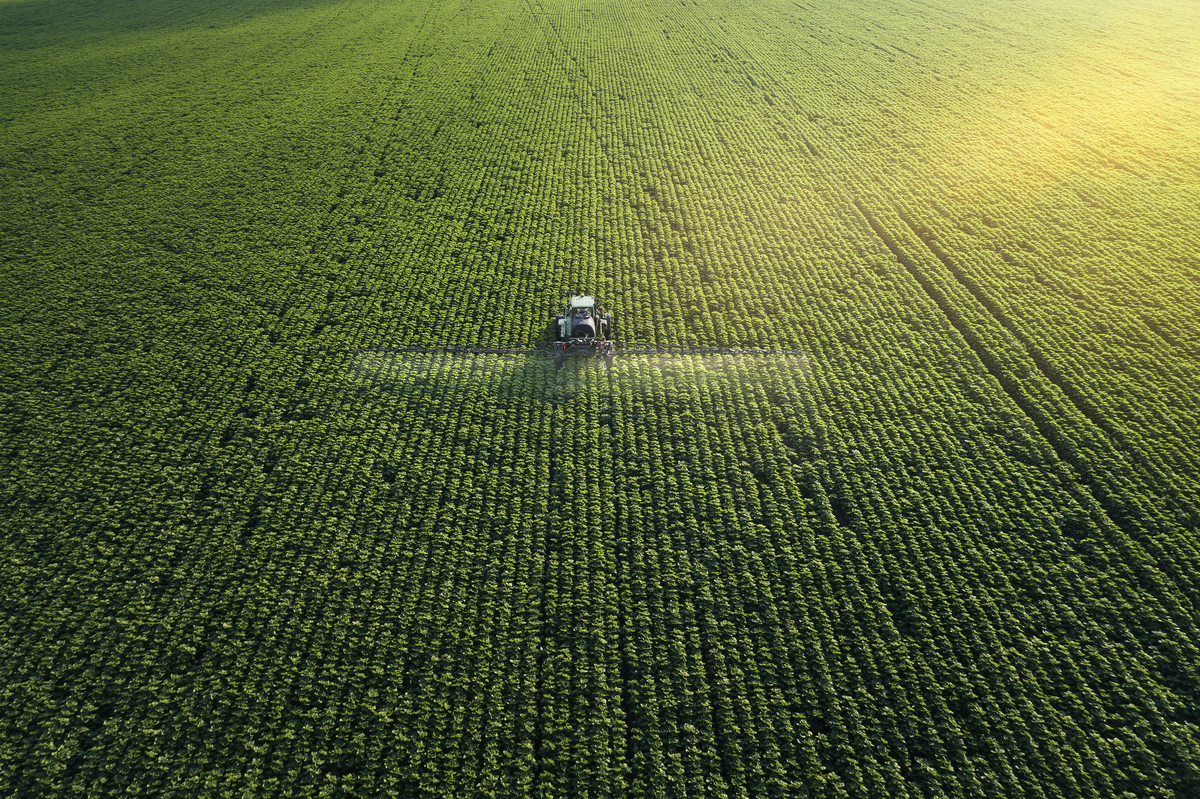
Liquid fertilizers are applied to agricultural crops, with seasonality in spring/summer and autumn months, after completion of sowing operations.
Romania has a total agricultural area of approximately 13.5 million hectares, of which approx. 8.2 million hectares represent arable land. The estimated liquid fertilizer consumption on irrigated land is 0.5–0.7 tons/hectare/year — injectable directly into irrigation systems. The same treatment can be applied to non-irrigated land, with specialized agricultural equipment, at approximately similar consumption per hectare.
The main cause of the supply deficit is the high production cost in the EU — the petrochemical industry is a major consumer of gas and energy, and European tariffs are higher than in exporting countries. Romania imports fertilizers from intra-community and extra-community countries. The fastest growth 2021–2022: Turkey, Bulgaria, and Georgia.
Operation adapted to agricultural seasonality — peak season speed, total segregation all year round.
Fully segregated vertical cylindrical tank. Level control system, layer sampling, overpressure valves — for quality verification at any time.
The pipelines are thermally insulated and equipped with temperature and pressure sensors — to preserve product properties regardless of season.
Flexible hoses DN250–DN300 from seagoing vessels, telescopic system for handling, rates of 250–300 mc/h into tank.
At peak season, the terminal can simultaneously load 2 tank trucks + 6 rail wagons, ensuring the necessary flow for deliveries to farms and agricultural warehouses.
VESSEL DISCHARGE
Flexible hoses DN250–DN300, telescopic system, rates 250–300 mc/h
TRUCK LOADING
Bottom loading, DN80 hoses, metering with flowmeters, rates 80–100 mc/h
RAIL LOADING
DN80 hoses, 6 wagons simultaneously, flowmeters per arm
Specific advantages for importers, distributors, and large farms.
We discuss annual volumes, delivery calendar for spring and autumn, dispatch modes, and tariff.

