GPO Terminal
Technical Concept & Presentation
A terminal designed for flexibility, speed, and simultaneous operation — to European standards, in the river-maritime area of Constanța Port.
A terminal designed for flexibility, speed, and simultaneous operation — to European standards, in the river-maritime area of Constanța Port.
The GPO Terminal occupies 9,714 m² on Plot 36.1, Berth 97, in the river-maritime area of Constanța Port. The investment objective is to create a modern liquid products terminal in accordance with European standards, which will increase the share of liquid goods transported by water and the volumes operated in the port.
Unlike existing terminals, predominantly focused on petroleum products and operated by state-owned companies, GPO offers a predictable commercial environment, modern technology, and the ability to operate three product categories simultaneously — liquid bitumen, biodiesel, and liquid fertilizers — without technological losses and without risk of cross-contamination.
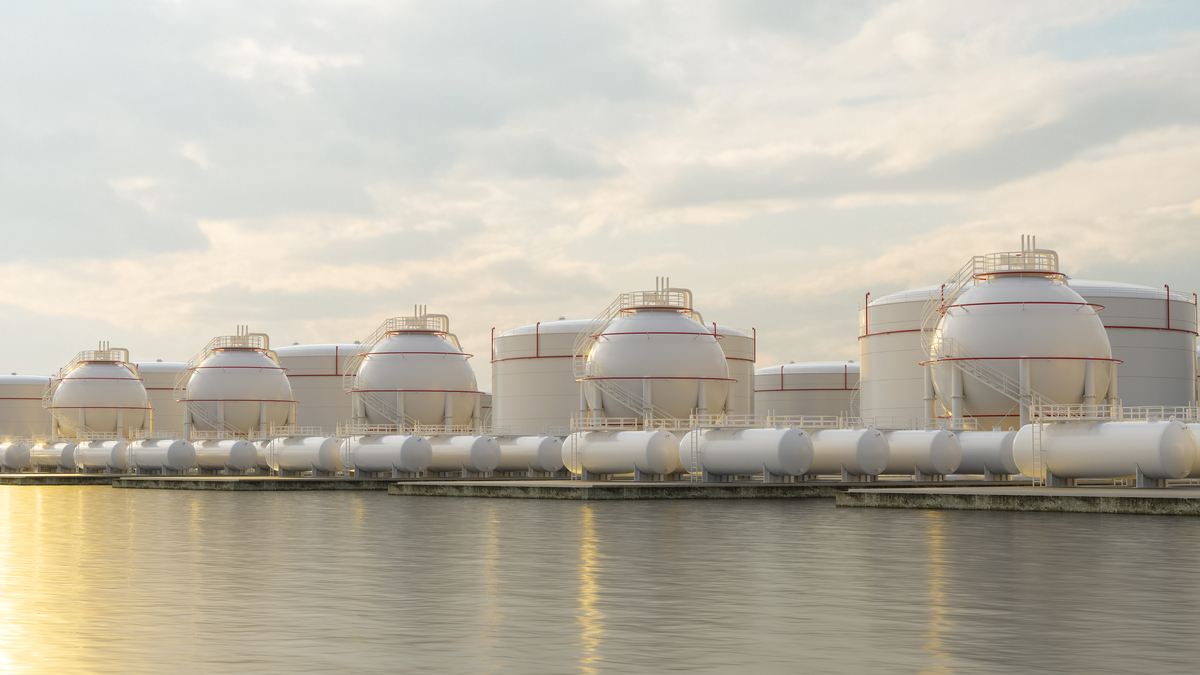
The terminal’s configuration allows for unloading a vessel into a tank in parallel with loading other products into road tankers and railcars — without one process blocking the other.
Unloading rates into tank: 250–300 m³/h, using the vessel’s own pumps, via marine loading arm (bitumen) or flexible hoses DN250–DN300 (biodiesel, fertilizers).
Two simultaneous stations, full/empty metrological weighing, DN80 arms or hoses, rates of 80–100 m³/h, control via mass metering.
Internal rail siding of 90 m, 6 railcars parking capacity, loading rates up to 250 m³/h, fixed weighing at entrance.
All processes are monitored and coordinated by a single dispatcher from the administrative building, via the SCADA system. Transport documents (CMR, accompanying letters) are automatically generated at the end of the operation.
From vessel berthing to issuing transport documents, all stages are standardized and automated.
Loading river vessels from the terminal follows the same principle, in reverse.
Nine technical elements integrated into a single automated flow.
Segregated pipelines per product, with short routes and thermal insulation where necessary.
10 encapsulated pumps, dedicated per product, with temperature, vibration, displacement sensors.
Diathermic oil for bitumen heating circuits.
6 storage tanks (5,000 m³) + 1 operational bitumen tank (500 m³).
90 m operating ramp, 6 railcar capacity, with fixed weighing at entrance.
PSI pump house and fire water tank, 40 minutes autonomy according to legislation.
2 loading/unloading stations + 2 metrologically certified scales.
Administrative building (300 m², G+1) with control room and video monitoring system.
Access roads, concrete platform, retention basin for tanks.
The project complies with current European requirements and brings a positive impact by reducing emissions and ensuring the availability of products imported by sea transport.
All design, approval, and authorization stages were completed in December 2024, in accordance with national and European legislation in force.
Transporting products by water, in large volumes, significantly reduces emissions per ton/kilometer compared to long-distance road or rail transport.
The project is part of the EU’s priority axes in the transport sector and eligible for non-reimbursable funding over 50%.
Three complementary perspectives on the investment.
Berth 97, Plot 36.1 — real multimodal access (sea, river, rail, road).
Send us the product type, annual quantity, and transport modes — we will respond with a tailored technical and commercial proposal.

