Product 02 · Biodiesel
Biodiesel
A mandatory component of Euro 5 diesel — handled in a segregated tank, with pipelines protected against thermal overpressure and dispatch via all transport modes.
A mandatory component of Euro 5 diesel — handled in a segregated tank, with pipelines protected against thermal overpressure and dispatch via all transport modes.
Unlike freely competitive products, biodiesel is mandatory under European regulation in Euro 5 diesel — currently at 7%, set to increase in the coming years. That means predictable demand, year after year, regardless of market fluctuations.
At GPO, we handle biodiesel in fully segregated tanks and pipelines, with safety valves against overpressure caused by thermal expansion — a crucial technical detail for a product sensitive to temperature variations.
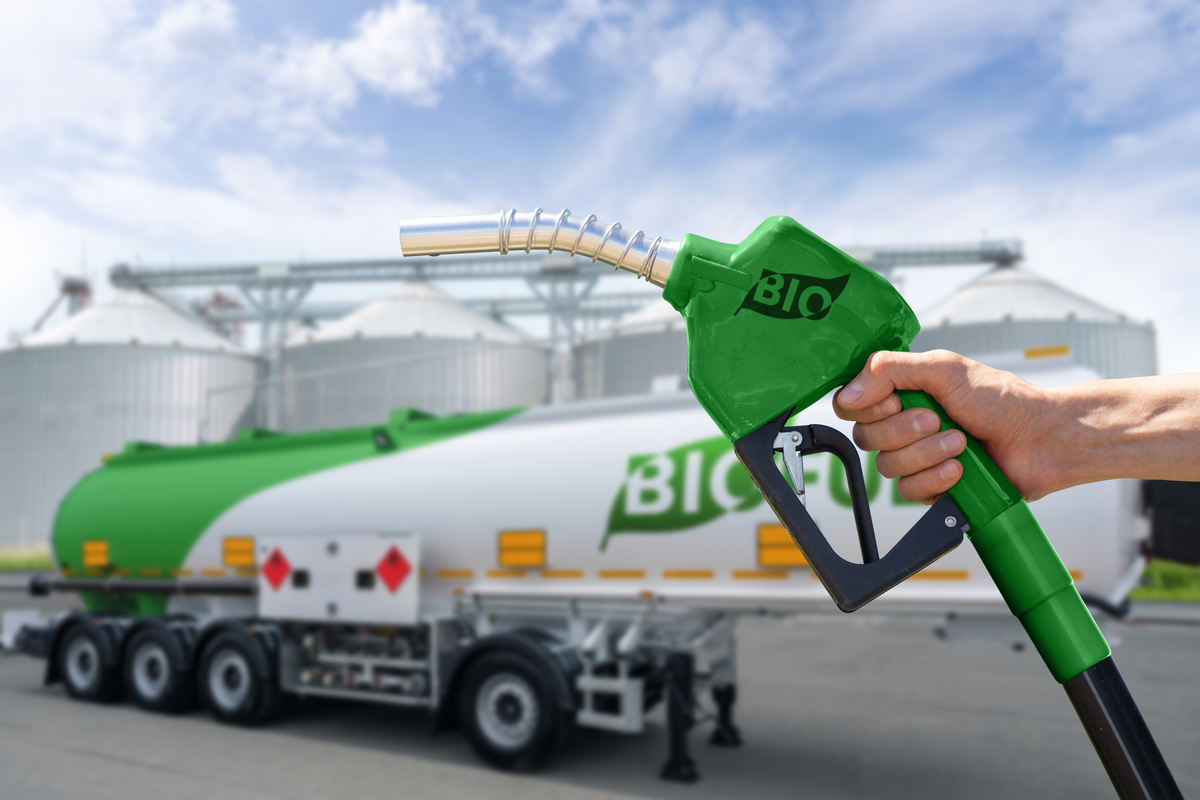
Biodiesel demand is directly linked to annual domestic and regional Euro 5 diesel consumption and to European targets for reducing fossil fuels.
In 2023, domestic Euro 5 diesel consumption was approximately 5.2 million tons, of which approx. 4 million tons were imported (source: Oil Terminal Constanța). To this volume, estimated agricultural consumption of approx. 800,000 tons per year is added.
Under European environmental regulations, the biodiesel component in Euro 5 is currently mandatory at 7%, set to increase in the coming years. In 2023, Romania imported approx. 60% of its biodiesel requirement, mainly from non-EU countries.
An additional advantage: biodiesel is exempt from excise duties, which makes it more price-attractive. Romania has significant potential for domestic production, but this has not materialized due to high utility costs and the investments required — therefore, import demand remains high.
Standard handling for liquid petroleum products, with additional protections specific to biodiesel.
Vertical cylindrical with an ellipsoidal roof, fully segregated from bitumen and fertilizers. The same protection and level control equipment as for the other products.
Biodiesel pipelines are protected with safety valves against overpressure resulting from thermal expansion of the product. Pressure sensors along the entire length.
Unloading from the seagoing vessel via DN250–DN300 flexible hoses, telescopic handling system, rates of 250–300 m³/h.
Loading into road tankers and rail wagons is done from the bottom, with DN80 hoses and control via mass flow metering, with progressive on-off valves.
VESSEL UNLOADING
DN250–DN300 flexible hoses, telescopic system, rates 250–300 m³/h
TRUCK LOADING
From the bottom, DN80 hoses, mass flow metering, rates 80–100 m³/h
RAIL LOADING
DN80 hoses, 6 wagons simultaneously, rates up to 250 m³/h
Five reasons why traders and Euro 5 diesel producers should have us on their short list.
Annual volumes, transport partners, delivery schedule — we discuss everything and come back with a proposal.

